Protect. Restore. Regenerate.

EGI is proving that changing the world begins at home.

EGI is the developer of choice for industrial-scale reforestation.

The opportunity
Opportunity · Story · Deep dive

01 | The Opportunity

EGI has developed an investable carbon and forest infrastructure to address Indonesian deforestation and the global demand for high-integrity carbon offsets.

EGI represents a unique investment opportunity with short, medium, and long-term windows — with generational returns.

Why Indonesia

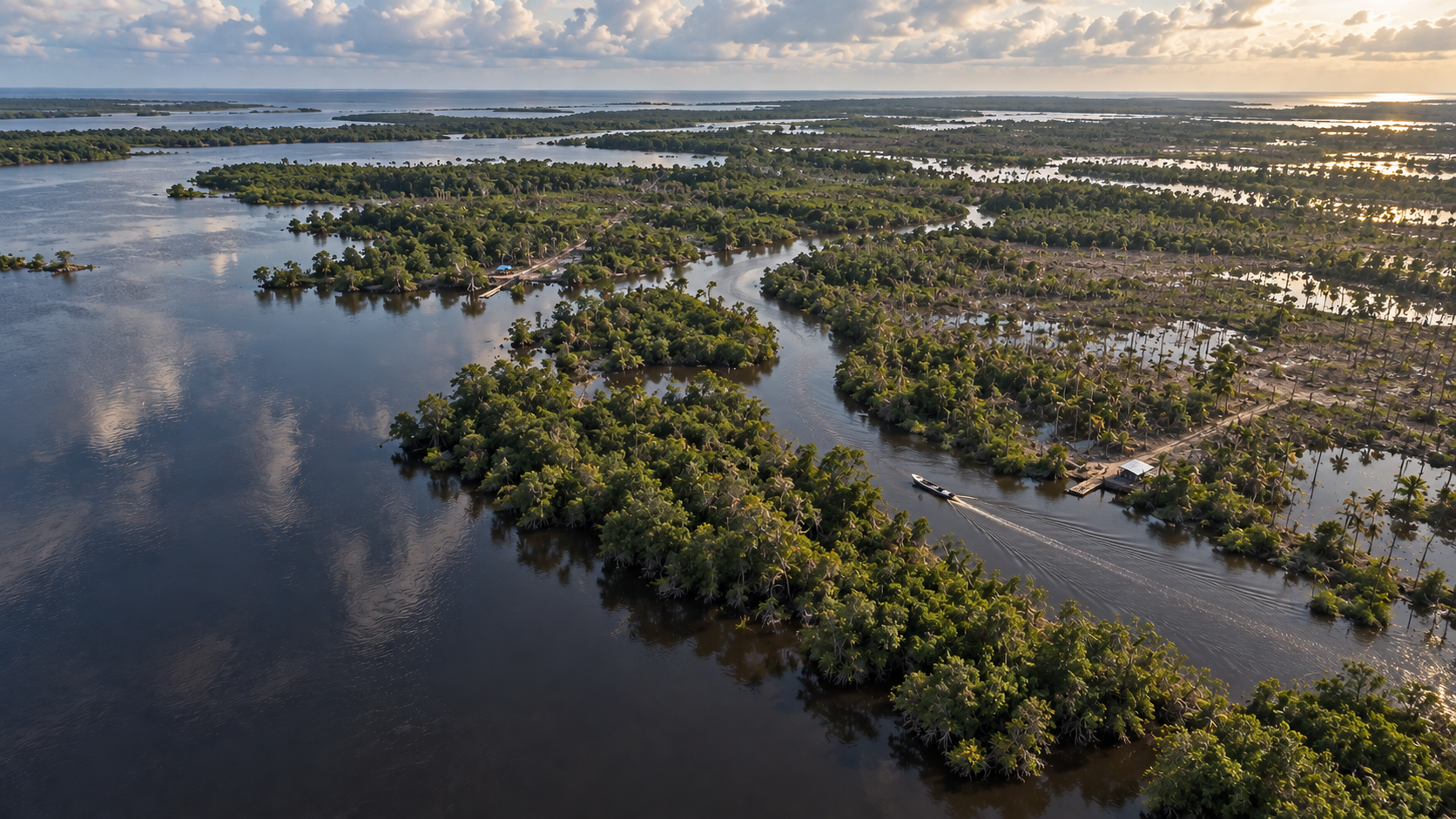
Demonstrably — Indonesia is the world’s premier location of carbon offset reforestation. Hosting massive carbon sinks, and an unprecedented government mandate to rehabilitate 12.7 million hectares of degraded land. Alongside a maturing regulatory carbon market — the country, its people, and EGI represent a secure position that addresses society, ecology, and economy within a singular, generation-defining investment opportunity.

Protect, Restore and Regenerate endangered and depleted Indonesian forests and their supporting ecosystems.

Screened
6.7M+ hectares of depleted forest, 2021–2026
Prioritized
90+ of Indonesian land concessions
Advanced
3.3M hectares taken to pre-feasibility

Screened, prioritized and advanced by EGI.

Goals
  1. Protect

    Partner on: deforested, depleted, and threatened land previously hosting some of the world’s most prolific lowland and montane rainforests, peat swamp forests, and mangrove forests — and irreplaceable customary communities.

  2. Restore

    Restore deforested, depleted, and threatened forests and supporting ecosystems

  3. Regenerate

    Maintain reforested forests and supporting ecosystems to the point of yielding consistent, dependable, and positive returns

Projected Outcomes, Revenue, and ROIs
  1. Social Benefits

    Physical wellbeing and Economic security for Local populations

  2. Ecological Benefits

    Indonesian ecosystems · International ecosystems

  3. Economic Benefits

    Local communities and Concession holders · Indonesia · International

Outcomes & Returns
  1. Short-term / 1-3 Years

    Upfront financing & Registration

    Capital injection from investors. Project development costs go toward creating the Mitigation Action Design Document (DRAM) or Project Design Document (DPP) to log into the SRUK system.

  2. Mid-term / 3–8 Years

    First carbon revenues & product sales

    Issuance and sale of high-integrity, internationally recognized carbon credits (SPE-GRK) through the IDX Carbon Exchange. Export of certified low-impact forest products begins under international trade rules.

  3. Long-term / 8+ Years

    Compounded equity and Sovereign climate assets

    Highly profitable, low-risk portfolio yields recurring credit revenues. Long-term stability provides steady dividends to community trusts, concession holders, and EGI alike.

Venture Studio

The Studio bridges high-integrity forest infrastructure with the socioeconomic realities of Indonesian customary communities.

  1. Local

    Rebuilds the NTFP and forest-guardianship economy communities already know, under community/cooperative ownership.

  2. Regional

    The physical and technical hub — research, ranger/fire infrastructure, monitoring tech, services — that generates the bulk of near-term revenue and the MRV data carbon buyers require.

  3. International

    A cohort accelerator that turns the Regional hub into a live test-bed for forestry-tech and regenerative-economy startups, recycling capital and technology back down into Regional and Local.

The current raise

The raise funds the first two concessions. The pro forma, the investor ask and the note terms sit inside the Investor Portal.

Request Access

02 | The Story

Saving the world begins at home.

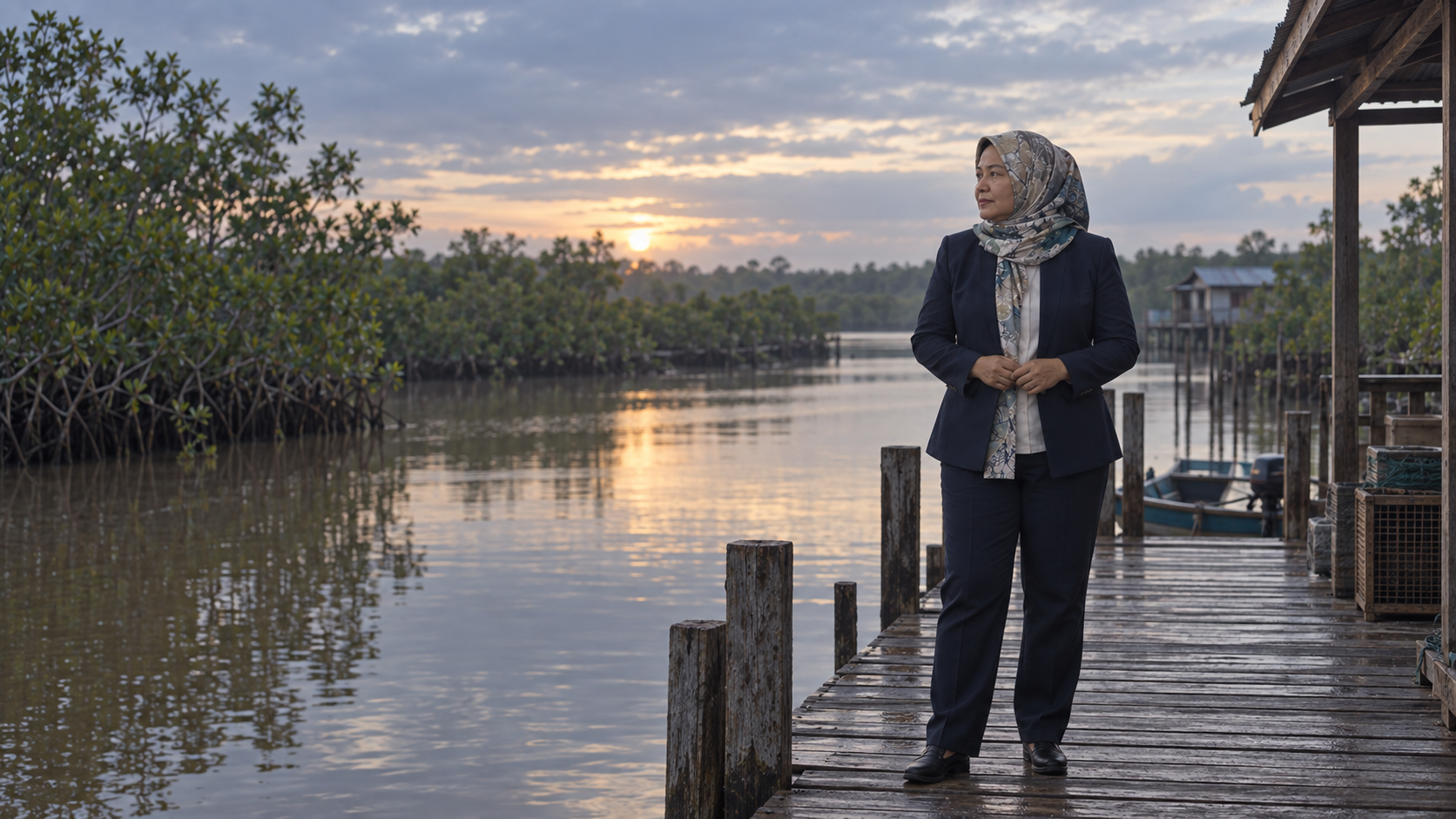
Morning light falls across Ibu Aminah’s concession. For her, and for Indonesia’s forest economy, it is the start of something promising.

Ibu Aminah is a fictional creation designed to illustrate a concession owner’s experiences with EGI.

03 | The Deep Dive

Investor Portal Framework

01

Executive Summary

Position
EGI has developed an investable carbon and forest infrastructure to address Indonesian deforestation and the global demand for high-integrity carbon offsets.

EGI represents a unique investment opportunity with short, medium, and long-term windows — with generational returns.

Mission
EGI has been created to serve Humanity, Economy and Ecology through the Protection, Restoration and Regeneration of degraded and threatened Indonesian forests and natural systems — bringing together local knowledge and modern technology to deliver lasting returns that promote the generational wellbeing and security of local and global communities, economies, and ecosystems in a way that is Measurable, Repeatable, and Scalable.
Vision
EGI aims to prove that changing the world begins at home.
02

Why Indonesia

Demonstrably — Indonesia is the world’s premier location of carbon offset reforestation. Hosting massive carbon sinks, and an unprecedented government mandate to rehabilitate 12.7 million hectares of degraded land. Alongside a maturing regulatory carbon market — the country, its people, and EGI represent a secure position that addresses society, ecology, and economy within a singular, generation-defining investment opportunity.

People
Traditional Indonesian Culture and Nature
Traditional Indonesian culture views humans as an interconnected part of nature with a moral duty to act as its caretaker rather than its master. Our key philosophies emphasize harmony, balance, and communal responsibility toward the earth.
Stewardship
Broad cultural and religious patterns across Indonesian communities reject human dominance over the earth, favoring a worldview where humans share a living system with all living things.

Today the Indonesian people are looking back — to see the future.

Policy

Indonesian government mandates are designed to build a forest-based economy for the people and ecology of Indonesia. National plans target massive green funds and large-scale climate finance inflows to reward high-integrity carbon credits for the national, regional, and international marketplace to support social and ecological natives at home.

In a nutshell, the Indonesian government mandates a shift from conventional, extraction-heavy logging toward a "triple bottom line" framework aimed at balancing social welfare, environmental preservation, and economic growth.

The primary regulatory pillars designed to build this forest-based economy focus on three dimensions

1. For the People
Social Forestry & Agrarian Reform

Historically dominated by state and corporate concessions, national policy now legally empowers local populations.

The 12.7 Million Hectare Target
Under core frameworks like Permen LHK No. 83/2016 and No. 9/2021, the government mandated the reallocation of 12.7 million hectares of state forest land directly to forest-dependent and customary communities.
The Five Management Schemes
Communities are granted long-term management permits (typically 35 years) across five distinct setups: Community Forests (HKm), Village Forests (Hutan Desa), Community Plantation Forests (HTR), Customary Forests (Hutan Adat), and Forestry Partnerships.
Livelihood Upgrades
The mandate shifts locals from illegal or subsistence logging to sustainable, income-generating activities such as agroforestry (e.g., shade-grown coffee, sustainable honey).
2. For the Ecology
Climate Targets and Strict Protection

The government ties its economic models directly to international climate commitments and ecosystem survival.

FOLU Net Sink 2030
Indonesia mandates that its Forestry and Other Land Use (FOLU) sector must absorb more greenhouse gases than it emits by 2030.
The Permanent Moratorium
A permanent ban remains active on issuing new logging or conversion permits across tens of millions of hectares of primary natural forests and carbon-dense peatlands.
"Zero-Burn" and Anti-Deforestation Laws
Drastic regulations enforce zero-tolerance for land clearing by fire, protecting critical ecosystems from destructive haze.
3. For the Economy
Sustainable Industry & Carbon Markets

To ensure financial viability without depleting natural capital, the state regulates how timber and forest assets are monetized.

Mandatory SVLK Certification
The government enforces the Timber Legality Verification System (SVLK). This national supply-chain mandate guarantees that all timber products exported from Indonesia are sourced legally and harvested sustainably.
Regulated Forest Carbon Trading
Under updated environmental frameworks—culminating in Permenhut No. 6/2026—Indonesia legally structured carbon economic value instruments. This mandate allows private concessionaires, local communities, and Indigenous groups to actively generate and trade carbon offsets via greenhouse gas emission reduction projects.
Ecology

A breadth, depth, capacity of natural resources and forestry.

Vast Carbon Reserves
Indonesia holds the world’s largest mangrove ecosystems, massive tropical peatlands, and the third-largest tropical rainforest.
High Sequestration Potential
Forestry and land-use projects have an estimated emission reduction potential of up to 1,283 million tonnes of CO2-equivalent per year.
Biodiversity Protection
Restoring these landscapes protects critical habitats for endangered species and revitalizes marine ecosystems.
Economy

A national commitment to create a forest-based economy.

Maturing Carbon Markets
Driven by frameworks like Presidential Regulation No. 98 of 2021 and platforms like IDX Carbon, the nation is scaling up compliance and voluntary carbon trading.
Venture Studio
EGI home-grown innovation and accelerations studio provides the capital, facilities, and support needed for Indonesians to identify, define, and create their future.
Society

A belief in nature-minded values and responsibilities.

Local Livelihoods
Community-led agroforestry, sustainable traditional industries, and nursery operations create stable local jobs founded on traditional knowledge and innovative intelligence.
Equitable Sharing
Structured programs aim to ensure that carbon revenues directly support rural development, gender equity, and lower-income groups.
03

Value Proposition

EGI offers secure, relationship-based ecosystems that capitalized on groundbreaking infrastructure, emerging technology, and proven operations to benefit humanity, ecology, and economy.

As an Indonesian forest and natural systems rehabilitation developer partnering with land concession holders — EGI has built a robust value proposition that aligns ecological restoration with commercial viability and national sovereignty frameworks like SRN-PPI (National Registry System for Climate Change).

Value Creation / the Asset Base

EGI offer unique, high-quality ecological and social value.

Premium Carbon Asset Engineering
By transform degraded concession lands into high-integrity, high-yielding carbon sinks. And implementing rigorous ARR (Afforestation, Reforestation, and Revegetation) and REDD+ methodologies, EGI generates credits with strong "beyond-carbon" narratives (biodiversity metrics and community indicators) that command premium pricing.
Concession Risk Mitigation & Legal Alpha
Concession holders face the risk of government revocation if lands remain idle or degraded. EGI creates value by securing their tenure through active, compliant land utilization that directly satisfies KLHK (Ministry of Environment and Forestry) mandates.
"Social Shield" and Community Architecture
EGI co-designs community-led agroforestry blocks (e.g., shade-grown coffee, bamboo, rotan) and establish micro-entrepreneurship incubators. This turns customary communities into the primary defense line against illegal loggers and encroachment, converting a traditional operational risk into a core value driver.
Biodiversity and Corporate Sponsorship Asset Creation
By restoring habitats for endangered species (e.g., Sumatran tigers, orangutans, or hornbills), EGI creates highly marketable biodiversity metrics. These are packaged into standalone corporate biodiversity certificates or used to command a pricing premium on carbon credits.
Value Delivery / Operationalizing the Solution

How EGI reliably deploys, protects, and maintains value on the ground.

Regulatory Concierge and Compliance Framework
You navigate Indonesia's complex, evolving carbon governance—including Permen LHK No. 21/2022 and foreign trade authorizations. EGI handles the entire pipeline: registration in the SRN-PPI, validation by accredited third-party auditors, and alignment with Indonesia's NDC (Nationally Determined Contributions) targets.
Radical Transparency
Buyers get verifiable proof of permanence and additionality, and bad actors are deterred by constant monitoring — backed by satellite, drone and ground measurement (MRV).
Joint-Venture Concession Playbook
EGI provides concession holders with a transparent, plug-and-play partnership infrastructure. EGI manages the upfront capital expenditure, operational logistics, and carbon project cycle, allowing the concession holder to pivot from extractive forestry to green yields with minimal friction.
Community Co-Management and Conflict Resolution
EGI delivers a continuous presence via structured social forestry programs. By channeling project dividends into local medical, educational, and entrepreneurial infrastructure, EGI aligns long-term community incentives with forest permanence.
Value Capture / Monetizing and Securing Returns

This is how EGI generates sustainable, high-margin revenues for our partnerships.

Tiered Multi-Market Arbitrage
EGI maximizes yield by dynamically routing credits across three distinct pricing tiers:
National Marketplace
Selling via the IDXCarbon (Indonesia Carbon Exchange).
Regional/Bilateral Deals
Leveraging Article 6 frameworks for bilateral transfers.
International Voluntary Market
Selling highly certified credits (e.g., Verra CCB standards or Gold Standard) with verified social and biodiversity co-benefits.
Risk-Adjusted Revenue Sharing Models
EGI employs a cascading waterfall payment structure with concession holders. Upfront operational costs and capital reserves are recouped first, followed by a transparent percentage-based split of carbon and non-timber forest product (NTFP) revenues, ensuring aligned financial incentives.
Diversified Bio-Economy Income Streams
EGI does not rely solely on carbon. We capture value through sustainable agroforestry yields and the commercialization of home-grown local business products developed via your incubator program.
Carbon Buffering and Bad Actor Insurance
EGI maintains a dedicated physical and financial credit buffer pool. This insulates our portfolio from localized reversals (such as illegal fires or geopolitical disputes), ensuring that contractual delivery obligations are met without capital loss.

Land concession owner profile

EGI is targeting ecosystem restoration concessions on degraded peat and mangrove land, not palm oil conversion and not logging concessions. Blue-carbon mangrove and Deep Peat are our model — as durable, higher-density carbon that doesn’t carry the non-permanence risk of short-cycle monoculture credits (acacia, oil palm, rubber, on 5–7 year harvest cycles). Durability, not price, is the position that EGI leads with.

Data centers are a growing profile of off-taker
as AI infrastructure scales, so does demand for durable, high-integrity offsets. That is structural demand — not a signed off-take, letter of intent, or named buyer.

The current scale (in hectares) of the EGI project pipeline.

According to our screening funnel — not a concession count — 6.7 million-plus hectares screened (2021–2026), 90-plus concessions prioritized, 3.3 million hectares advanced to pre-feasibility.

04

Target Market(s)

The breadth and depth of the EGI offering speaks to an abundance of national, regional, and international target markets — via an commensurate number of product and service offerings.

To do so, EGI works within governmental rules and regulations governing Indonesian Land Concessions, Carbon-Offset Standards, and National and International sale of High-Quality Carbon Credits.

In addition, EGI complies with additional governmental, organizational, and business standards and regulations governing intellectual property.

Economic

Indonesian Government Policy Makers and Departments

Indonesian Land Concession Owners

Customary Community Leadership and Residents

Other Reforestation Organizations

Carbon-offset Standard Bearers

Indonesia's national standard bearer for carbon offset credits is the Indonesian government through its domestic certification system, alongside internationally recognized independent bodies.

National and Domestic Standards

SPE-GRK (Sertifikat Pengurangan Emisi Gas Rumah Kaca)
The official Indonesian greenhouse gas emission reduction certificate managed by the national government.
SRN-PPI (Sistem Registrasi Nasional Pengendalian Perubahan Iklim)
The national registry system where all domestic mitigation actions and offset projects must be registered before issuance or trading.
SRUK (Sistem Registrasi Unit Karbon)
The updated carbon unit registry system introduced under Presidential Regulation No. 110 of 2025 to administer and track carbon units.
IDX Carbon (Indonesia Carbon Exchange)
The official exchange platform supervised by Indonesia’s Financial Services Authority (OJK) for trading local quotas and credits.

International Independent Standards

Gold Standard
Operates via mutual recognition agreements with the Indonesian government, allowing dual-labeled credits under specific compliance pathways.
Verra and Plan Vivo
Widely recognized international private voluntary standards that certify project methodologies, though they still require alignment and registration with Indonesia's national framework.
UNFCCC Article 6.4
Supranational crediting mechanisms recognized under international compliance frameworks.
Social

Human rights, education and equity groups (NGOs)

Human rights, education and equity groups (Indonesian Government)

Academic institutions

Ecological and Environmental Organizations

Other forest economy based companies, NGOs, and supporting businesses

05

Goals

Protect, Restore and Regenerate endangered and depleted Indonesian forests and their supporting ecosystems.

Screened
6.7M+ hectares of depleted forest, 2021–2026
Prioritized
90+ of Indonesian land concessions (screened, prioritized and advanced by EGI)
Advanced
3.3M hectares taken to pre-feasibility
Protect. Restore. Regenerate.

Protect

Partner on
deforested, depleted, and threatened land previously hosting some of the world’s most prolific lowland and montane rainforests, peat swamp forests, and mangrove forests — and irreplaceable customary communities.

Restore

Restore deforested, depleted, and threatened forests and supporting ecosystems

Advance Indonesian forest biodiversity (flora and fauna) and ecosystem balance through continuous monitoring, ecological governance, and natural and social infrastructure.

Regenerate

Maintain reforested forests and supporting ecosystems to the point of yielding consistent, dependable, and positive returns

Maintain Indonesian forest biodiversity (flora and fauna) and ecosystem balance through continued monitoring, ecological governance, and natural and social infrastructure.

Regenerative Outcomes

Optimize Carbon Capture and Oxygen Output

Leverage human knowledge, wisdom, and frontier technology to enhance the efficiency and scalability of tropical reforestation and supporting natural systems.

Safeguard Climate Resilience

EGI implements predictive modeling, data-driven strategies and protocols to protect and preserve carbon sinks against climate change — as well as manmade and natural disasters.

“Model. Monitor. Adapt.” / Continuous Modeling, Monitoring, and Adapting.

Promote Innovation

EGI will build and promote ‘Home-Grown’ innovation and business acceleration to advance forest/carbon/ecosystem focused initiatives, products, and services.

Empower Local Populations

EGI will empower regional and customary communities through direct engagement programs that support lives and livelihoods with respect and reverence to traditional beliefs, culture, and relationships between humans and their environment.

06

Corporate Structure

Structure

Natural Infrastructure Asset Class with NBS (Nature-Based Infrastructure) / Indonesia

A Natural Infrastructure Asset Class is an emerging financial and economic category that treats natural ecosystems—such as forests, wetlands, and rivers—as vital, service-providing infrastructure. Instead of viewing nature as free or disposable resources. This framework assigns economic value to ecological systems because they perform essential public and commercial services like flood control, water purification, and carbon storage.

Key Components

Natural Ecosystems
Naturally occurring features like forests, mangroves, coral reefs, peatlands, and grasslands.
Intelligence and Knowledge
The EGI NBS is supported by local expertise and continuous field data, focused on the preservation, restoration and regeneration of Indonesian forests and natural systems.
Hybrid Infrastructure
Human-made designs and technologies that merge with nature, such as reseeding and restored wetlands.
Ecosystem Services
Measurable benefits like flora and fauna monitoring, natural disaster protection, water filtration, and temperature regulation that replace expensive built ("grey") infrastructure.

Established as a for-profit Indonesian benefit company

An Indonesian benefit company is a Social Enterprise registered as a Limited Liability Company (Perseroan Terbatas or PT), operating under a specialized legal and registration framework introduced by the Indonesian Ministry of Law in late 2024 to balance commercial profit with a formal social or environmental mission.

Key Characteristics

Dual Purpose
Unlike a traditional Perseroan Terbatas whose primary objective is maximizing shareholder profit, an Indonesian social enterprise PT legally embeds a public utility, environmental, or social mission directly into its Deed of Incorporation (Akta Pendirian).
Profit with Purpose
It functions as a for-profit commercial entity (distributing financial returns) while formally committing a portion of its operations or governance structure toward solving social and ecological challenges.
Formal Registration
Handled via notarial deeds and the Ministry of Law's system (Ditjen AHU), this framework helps formalize Indonesia's hundreds of thousands of informal social enterprises, giving them explicit legal standing distinct from standard commercial corporations or non-profit foundations (Yayasan).

With alignment, sponsorship and guidance from Axiom Coherence

EGI is sponsored by Axiom Coherence an international Venture Capital Fund and Executive Consultancy captained by Norwegian entrepreneur and financier Tom E. Jensen.

Axiom Coherence is built on a single premise
capital markets have optimized for extraction — pulling value out of ecological, social, and technological systems faster than those systems can replenish themselves — and have mistaken the resulting short-term coherence for genuine health. We invest in ventures that reverse this direction of flow: technologies and business models that restore, sustain, and regenerate the systems they depend on, rather than depleting them for the sake of a clean growth story.

Axiom Coherence provides early round capital funding to international entities addressing a transition from the finite consequence of the extraction-based economy to the infinite outcomes of carbon-critical regenerative infrastructure and ecosystems.

True to etymology, Axiom is statement, rule, or idea that people accept as obviously true without needing proof. One that serves as a starting point for further reasoning, logic, and math. Coherence is an infrastructure wherein the parts fit together in a clear, logical, and reasonable way to form a united whole. And Axiom Coherence is a mindset where the sum of our future begins.

Alignment with the 2030 Indonesian “Forest Economy” Mandate

Indonesia targets achieving a net carbon sink by 2030 through its FOLU Net Sink commitment and transitioning its forestry sector into a diversified value-creation economy.

Approach and Means

International Capitalization via Axiom Coherence

Local Influence

Longstanding relationship Indonesian land Concession owners

Venture Studio

Our internal social-business accelerator that systematically creates, launches, and scales multiple startups from the ground up by acting simultaneously as an idea generator, operational builder, and financial investor.

The Studio bridges high-integrity forest infrastructure with the socioeconomic realities of Indonesian customary communities.

Structured Implementation

Planning / Organization

Execution / Infrastructure

Innovation / Implementation

Maintenance / Systems

Projected Outcomes, Revenue, and ROIs

Exampled by

Social Benefits for

Physical wellbeing and Economic security for Local populations

Ecological Benefits for

Indonesian ecosystems

International ecosystems

Economic Benefits for

Local communities and Concession holders

Indonesia

International

USP

Creation of a closed-loop system for a regenerative social, environmental, and economic future.

Including

Relationships

Axiom Coherence

EGI Venture Studio

Indonesian government

Indonesian land Concession owners

Customary Communities

The Indonesian people

International carbon marketplace

Expertise

Seasoned leadership

Local

International

Traditional Indonesian customs and living intelligence

Emerging Technology

Infrastructure and Systems / Natural Systems

Equitable Outcomes

Social

Ecological / Environmental

Economic / Indonesia / Global

Access to global markets

International Carbon Offset Market

Ingredient/CPG market

Medical market

Tourist market

With the rise of international data centers there comes a demand for carbon offsets — with reforestation being one of the largest sources for secured credits.

Indonesia — EGI exist to bring balance within and between natural, human, and technological infrastructures and systems via local regenerative forestry — and global data center carbon offset. We are committed to a path that takes challenges the economics anthropocentric extraction to one of ecocentric coherence in which regeneration is the of measure of value and benefit for generations to come.

EGI is built on

Relationship creation, management and reporting

Capital Investment deployment, oversight and reporting

Assets development, implementation and management

Operations and Infrastructure development, implantation, management and reporting

Sales and Revenue creation, oversight and reporting

Growth, sustainability, and returns oversight and reporting

06

Venture Studio

EGI’s Venture Studio puts agency and opportunity in the hands of Indonesia’s customary forest communities. Here, traditional knowledge meets new ideas. Together, we incubate, launch, and scale ventures in reforestation, infrastructure, and carbon sequestration that will benefit generations to come.

It is how EGI serves Humanity, Ecology, and Economy, in Indonesia and beyond.

Areas of concentration

Ecological Economics

Ecology deals with the energy and matter transactions of life and the Earth, and the human economy is by definition contained within this system.

Human Ecology

Human ecology is the interdisciplinary study of the relationships between humans and their natural, social, and built environments.

Ecological Economics

Ecological economics conceives of the economy as an open system embedded in the larger systems of society and the biosphere.

Social, Environmental, and Economic Systems

Yes, several terms encompass humanity, ecology, and economy, most notably sustainability (the three pillars of social, environmental, and economic systems), ecological economics, and socio-ecological systems.

Key Frameworks

Sustainability / Sustainable Development
Uses the three pillars (people/humanity, planet/ecology, and prosperity/economy) to balance long-term needs. Details are outlined by the United Nations Sustainable Development Goals.
Ecological Economics
A transdisciplinary field that treats the human economy as a subsystem embedded within the Earth's natural ecological and social systems.
Socio-Ecological Systems (SES)
An academic concept capturing the complex, integrated dynamics between human societies and ecosystems, including their economic activities.
Executive summary

The Studio Thesis

Indonesia's governmental policy direction — including social forestry (KHDPK), the FOLU Net Sink 2030 target, and the newly liberalized carbon market under Perpres 110/2025 — has created a narrow window where forest protection, customary community livelihoods, and investable capital can align in one vehicle — instead of competing for the same land.

Most actors that have tried this route have optimized for a single pillar approach (carbon revenue, or ecotourism, or community programs) and treated the other two pillars as compliance overhead.

The EGI Studio is designed to run all three as one closed-loop system, with the customary community's Free, Prior and Informed Consent (FPIC) and equity position as the entity structure, not just an add-on or feel good greenwashing marketing program.

The Three tiers

Sequenced by capital intensity and trust-building time, not by importance

Local

Timing
Starts Now

Rebuilds the NTFP and forest-guardianship economy communities already know, under community/cooperative ownership.

Regional

The physical and technical hub — research, ranger/fire infrastructure, monitoring tech, services — that generates the bulk of near-term revenue and the MRV data carbon buyers require.

International

A cohort accelerator that turns the Regional hub into a live test-bed for forestry-tech and regenerative-economy startups, recycling capital and technology back down into Regional and Local.

Structure

A hybrid stack of an Indonesian foundation (mission steward and FPIC counterparty), community-owned cooperatives (equity vehicle for customary communities), Indonesian operating companies (commercial ventures), and a holding company that receives investor capital and owns stakes in the operating companies and accelerator portfolio.

Return profile

Short-term (1–3 yr) returns are modest and largely reinvested, built on NTFP cash flow

Medium-term (3–7 yr) returns turn positive as verified carbon revenue and hub operations mature

Long-term (7–20+ yr) returns compound through durable land-based cash flow, accelerator exits, and replication of the model across additional concessions — a "generational" return.

Please note

The sections below lay out the structure, programming, funding stack, facilities, financial model, and governance needed to get there, plus the risks that have hampered or ended comparable projects in Indonesia before.
Context & Rationale

The policy shift is real, recent, and still being written. Indonesia's Ministry of Environment and Forestry has been converting former timber/mining concessions into Kawasan Hutan dengan Pengelolaan Khusus (KHDPK) — forest areas with special management — explicitly to accommodate social forestry (Perhutanan Sosial) rather than industrial extraction (AP2SI).

In October 2025, Presidential Regulation 110/2025 replaced the 2021 carbon framework, opening private ownership and direct trading of carbon units through a new dual-registry system (SRN PPI for climate actions, SRUK for the units themselves), and effectively lifting the de facto moratorium on international voluntary credit sales (TruCarbon, ICAP). Every actor in the market has 12 months from that date to align — which means the rulebook the EGI Studio will operate under is still being finalized, and is not settled policy.

The customary-community reality is the other half of the picture, and it cuts against a naive read of that policy shift. Indonesian law still defaults most forest land to state ownership; an estimated 4.1 million hectares of customary community territory overlaps protected forest zones where communities have been treated as occupants rather than owners, even after a 2012 Constitutional Court ruling recognized customary (adat) forests as distinct from state forest — a ruling that still lacks implementing legislation in most provinces (East Asia Forum).

An Indigenous Peoples Bill addressing this has been a parliamentary priority but is not yet law. In the meantime, carbon and conservation projects that skip genuine FPIC have produced real harm: the World Bank-backed East Kalimantan REDD+ program is the subject of an active “Indigenous”-rights complaint from the Long Isun community over consent and benefit-sharing failures (Forest Peoples Programme; Accountability Counsel). That case is the cautionary template this studio has to design away from, not a one-off.

Why a venture studio — the EGI Venture Studio — fits this moment specifically: the government wants forest-based economic activity on this land, buyers want high-integrity credits, communities want their livelihoods and tenure security back, and none of those three actors can build the connecting infrastructure alone.

A studio that treats customary land tenure recognition, FPIC, and community equity as the entry ticket — rather than a cost to negotiate down — is structurally positioned to be the counterparty all three want, at a moment when the regulatory door is unusually open.

Mission, Vision & Operating Philosophy

Our principles only mean something if they change what the studio will and won't do. Translated into operating rules:

Adat-first governance. All projects proceeds with documented FPIC, and the customary institution is a contracting counterparty with veto rights — not a stakeholder consulted after terms are set.

Closed-loop economics. A fixed share of every revenue stream (carbon, licensing, accelerator carry) recycles into Local and Regional programs before it reaches investor distributions — this is written into the capital stack, not left to discretion (see Governance).

Right-sized technology. LiDAR, satellite, IoT and drones extend traditional forest knowledge — they verify and scale what guardians already know, they don't replace the guardians or the decision authority of customary institutions.

Three-horizon capital discipline. Short, medium, and long-term capital are raised and reported separately, so forest and community timelines are never bent to fit a 3–5 year fund cycle that doesn't match how forests or trust actually regenerate.

A hard no-conversion line. The EGI Studio does not develop, accept capital tied to, or provide services to logging, palm oil, or mining conversion on customary land — including when it would be more profitable — because that line is what makes every other claim in this plan credible to communities, government, and buyers alike.

Legal & organizational structure

Indonesian forestry and social-forestry law drives most of legal and organizational structure: social forestry/KHDPK licenses are granted to community groups, cooperatives (KUPS) or customary institutions, not to a foreign-capital company directly, and forestry-adjacent commercial activity generally needs Indonesian incorporation. That constraint, plus the mission-lock requirement, argues for five entities rather than one:

EntityRoleOwns / HoldsCapital Source
Yayasan (Foundation)Mission steward; FPIC counterparty; delivers grant-funded Local programs (guardianship stipends, training, health/education)Concession/FPIC relationships; a controlling or golden-share position over HoldCo's land-use decisionsPhilanthropic grants, public co-funding
Koperasi (Cooperative), one per communityThe community's own equity vehicleMembership units for community members; equity/revenue-share in local OpCo venturesMember contributions; revenue share
PT (Indonesian OpCo)Runs commercial ventures: NTFP aggregation/brand, monitoring/MRV servicesOperating assets, brand, contractsNTFP/services revenue, blended finance
Carbon Project SPVHolds the SRN PPI/SRUK-registered carbon project(s) per concessionVerified credits; benefit-sharing agreement with the Koperasi(s) as a binding termForward purchase agreements, results-based payments
HoldCo / EGIReceives investor capital; owns equity in the PT(s) and the accelerator vehicleEquity stakes; IP/tech stackPrivate impact investment, DFI/blended finance
Mission lock is structural, not nearly a policy statement
the Foundation holds a golden share or reserved-matter veto in HoldCo's charter over land-use and no-conversion decisions, and every Carbon SPV's benefit-sharing agreement with its Koperasi is a condition precedent to that SPV issuing or selling any credits — not a side letter. This also directly answers the market's own risk pricing: Perpres 110/2025 explicitly allows community benefit-sharing to be embedded in a project's terms while the credits remain saleable internationally.

In conclusion, the correct structure becomes a return-protecting decision — not just an ethical posturing.

Programming: Local, Regional, International

Local

Starts in Year 1, in one or two pilot concessions, as it needs the least capital and builds the trust everything else depends on.

Rebuilds the non-timber forest product (NTFP) and agroforestry economy communities already practice — forest honey (including stingless bee/kelulut), bamboo and rattan, damar and other resins, medicinal plants, and multistrata agroforestry (coffee or cacao under native canopy) — plus paid forest-guardianship and patrol roles.

The studio's role is deliberately narrow
a revolving community fund for working capital, technical training paired with the community's own knowledge holders (not replacing them), shared aggregation and processing infrastructure, a common regional brand for market access (direct-to-consumer, retail at the Regional hub, and export), and guardianship stipends funded first by grants and later by carbon results-based payments.
Ownership stays with the community
KUPS groups and the local Koperasi hold the enterprises, individual smallholders keep their own livelihoods, and The Studio takes no equity here — only a small aggregation/brand margin, most of which is reinvested locally under the closed-loop rule above.

Regional

This is where the capital and the revenue concentrate. Three strands, sharing one hub

Research & Institutional Partnerships — university field stations, biodiversity and carbon-stock studies, and access to government forestry initiatives and co-funding, positioning the hub as the credible science backbone the carbon projects need.

Ranger and Fire-prevention Infrastructure — a paid ranger corps recruited from the customary communities themselves, trained in both traditional forest knowledge and emerging tools: satellite change-detection, LiDAR biomass surveys, drone patrol, and IoT fire/poaching sensors. This is also the MRV backbone the Carbon SPV needs to issue credible credits.

Services layer — mobile health clinics, education/scholarship partnerships, and a microfinance/revolving loan facility that lets Local entrepreneurs grow beyond what the community fund alone can provide.

Regional is the tier where "self-determination" for Local and "credible MRV" for the Carbon SPV are actually the same infrastructure, which is why it sits physically between the other two tiers rather than beside them.

International

A cohort-based Accelerator, run in partnership with an established accelerator operator rather than built from scratch, focused on forestry technology, forest-derived medicine and bioprospecting (structured to share benefits back to source communities, consistent with Nagoya Protocol principles), and regenerative/closed-loop economy ventures more broadly.

The Studio contributes what the accelerator partner can't
an investment thesis grounded in a live forest system, deal flow from its own network, and — critically — the Regional hub itself as a test-bed where founders get real field access to forest concessions, monitoring data, and ranger/community partnerships as their unfair advantage over founders working from a lab or an office.
Capital
the studio co-invests alongside the accelerator partner's deployable capital (typically SAFE/equity at pre-seed through seed) and takes carried interest and/or direct equity. A fixed percentage of that carry, plus a revenue-share commitment from portfolio companies that use the hub, recycles into Regional and Local per the closed-loop principle — the mechanism, not just the intent, is what makes this tier a source of generational funding for the other two rather than a separate business.
Facilities & Infrastructure

Build in phase with revenue and trust — not ahead of it

PhaseFootprintWhat It IsCost Posture
1 — Local (0–18mo)One community basecamp per pilot concessionAggregation/secure storage facility, ranger outpost, satellite connectivityLow; local materials and paid community labor as part of the program itself
2 — Regional hub (18mo–5yr)One flagship hub per concession or groupingField research lab, ranger/fire command center, health post, training centerHigher capex, phased and tied to tourism/carbon revenue ramp
3 — InternationalNo additional or dedicated new campusCohorts run mostly virtually, with periodic in-person immersions hosted at the Regional hubMinimal incremental capex; monetizes hub off-season capacity

Wherever a partner already exists — a university field station, an established eco-lodge operator — lease or joint-venture with it before building new; reserve new construction for where no partner option exists or where owning the guest/brand experience is strategically necessary (as it likely is for the flagship Regional hub).

Funding & Capital Stack

No single capital type will fund all three tiers — each has a different risk tolerance, time horizon, and reason to say yes. Capital will match to entity and phase by design:

Capital TypeEntityPhaseInstrumentTypical Source
Philanthropic / GrantYayasan1–2Program grants, technical assistance, first-loss capitalConservation and Indigenous-rights philanthropy
Public / GovernmentYayasan & PTAllCo-funding, licensing accessBPDLH, Perhutanan Sosial/KHDPK programs, provincial forestry budgets
DFI / Blended FinanceHolding Company & PT2Guarantees, concessional debt, green/blue bondsFacilities structured like the Tropical Landscapes Finance Facility — UNEP-anchored, blending grant, guarantee and bond layers (TLFF, UNEP)
Carbon FinanceCarbon SPV1 onwardForward purchase agreements, results-based payments under SRN PPI/SRUKResults-based payment programs
Private Impact InvestmentHolding Company2–3Patient equity, revenue-based financingImpact funds, family offices aligned with the no-conversion mandate
Accelerator CapitalInternational SPV1SAFE/equity co-investmentThe accelerator partner's own LP capital
Two tailwinds and one headwind worth naming
Perpres 110/2025 opens private carbon ownership and international sales in a way the market didn't have before, which is why the Carbon SPV can realistically attract forward-purchase capital now (TruCarbon); TLFF-style blended structures are a proven Indonesian precedent for de-risking DFI and private capital together (Blended Finance Taskforce). The headwind is that serious buyers and DFIs are now underwriting FPIC and benefit-sharing quality as a financial risk, not just a reputational one, after cases like Long Isun — which means the Governance section below is a funding requirement, not a separate topic.
Financial Model
Revenue streams
NTFP product margin (Local), verified carbon credit sales — forward and spot (Carbon SPV), research/data licensing (Regional), a modest interest spread on the microfinance facility, and accelerator carry plus equity mark-ups (International).
Cost structure by phase
Local is stipends, training, and light aggregation infrastructure. Regional carries the largest fixed cost — hub capex, permanent staff (rangers, researchers, hospitality), and the MRV technology stack. International's cost is mainly co-investment capital and cohort operations, largely borne alongside the accelerator partner rather than alone.

Return profile, matched to the horizons in the brief

Short-term (1–3 yr)
cash flow from NTFP sales; grant-funded operations; investor return is minimal by design — this window is about proving the model and securing FPIC, not distributions.
Medium-term (3–7 yr)
carbon revenue scales as projects clear verification and the hub reaches operating break-even; first accelerator investments begin to show markups; investor return turns positive.
Long-term (7–20+ yr)
compounding value from standing forest carbon stock, mature accelerator exits, and replication of the whole model across additional concessions — this is the generational return: a durable, land-based cash-flow business plus venture-style upside layered on top of it, rather than either alone.

A detailed unit-economics model (per-hectare cost of protection, break-even credit price, hub occupancy assumptions) is the natural next deliverable once a specific pilot concession and baseline data are selected — flagged in Next Steps.

Governance & Community Benefit-Sharing

FPIC is treated as a standing condition, renewed at every material decision (a new venture line, a new investor, a change in land use) — not a one-time consent form filed at project launch.

The customary institution signs as a counterparty to the benefit-sharing agreement, not as a consulted stakeholder, and that agreement's terms are made transparent to the whole community, not negotiated privately with a subset of leaders — the specific failure mode that produces elite capture and the kind of dispute now playing out in the Long Isun/East Kalimantan case (Forest Peoples Programme).

An independent grievance mechanism, funded and empowered to pause activity while a complaint is investigated, is a standing cost of doing business here, not a contingency line — the absence of one is what turned the East Kalimantan project into a formal accountability complaint rather than a resolved disagreement.

On tenure
The Studio treats securing customary forest (Hutan Adat) legal recognition for its pilot communities as a prerequisite investment rather than someone else's problem, funding the petition process where needed. This is both the right thing to do given the unresolved gap left by the 2012 Constitutional Court ruling and the pending Indigenous Peoples Bill, and a direct de-risking move for investors: clear title is what makes a 15–20 year carbon and land-based revenue thesis underwritable at all (East Asia Forum).
Measurement, Reporting & Verification
DimensionCore MetricsVerification
EcologicalHectares protected/restored; verified tCO2e sequestered or avoided; biodiversity indices; fire incidenceIndependent third-party MRV, registered under SRN PPI/SRUK, aligned to recognized methodologies (e.g., Verra, Plan Vivo)
EconomicHousehold income change; number and survival rate of Koperasi/KUPS enterprises; hub revenue by stream; accelerator portfolio valueAnnual community economic survey; audited financials by entity
SocialCommunity members in paid guardianship/ranger roles; health and education access; FPIC agreements renewed; grievance cases opened and resolvedGrievance mechanism log, published on a set cadence to the community and to funders

Reporting on all three dimensions at the same cadence, to the same audiences (government, funders, and the community itself), is what makes the outcomes Measurable, Repeatable and Scalable rather than three separate narratives told to three separate audiences.

Risk Factors & Mitigations
RiskMitigation
Land Tenure / Concession AmbiguityFund Hutan Adat legal recognition proactively; only operate where FPIC is genuine and documented
Carbon price / market riskDiversify revenue beyond carbon; use forward agreements with credible buyers; hold to high-integrity standards to command premium pricing
Community Trust Erosion / Elite CaptureWhole-Koperasi equity design; independent, resourced grievance mechanism; public benefit-sharing terms
Political / Regulatory RiskBuild relationships across KLHK, BPDLH, and provincial government; design to benefit from — not depend on — any single regulation, given Perpres 110/2025's own 12-month transition window
Execution / Organisational CapacitySequence Local before Regional before International; hire local talent first; partner rather than build wherever possible
Reputational Risk (perceived as another "green grab")Publish benefit-sharing terms; resource the grievance mechanism visibly; avoid the exact governance gaps documented in the Long Isun/East Kalimantan case
Implementation Roadmap
0–18 months
Local pilot launches in 1–2 concessions; FPIC completed and Koperasi(s) legally formed; first NTFP aggregation and guardianship stipends live; Yayasan formed; first philanthropic/grant capital closed.
18 months–5 years
Regional hub built or partnered; carbon project(s) registered under SRN PPI/SRUK with first credit sales; PT and HoldCo capitalized through blended finance; International accelerator partnership signed and first cohort launched.
5–15+ years
Replication across additional concessions; mature carbon revenue and accelerator portfolio realizations; the closed-loop profit-recycling mechanism fully operating; the model documented as a licensable playbook for other forest-based studios — the point at which "Measurable, Repeatable, Scalable" stops being a phrase and becomes an exportable asset in its own right.
Immediate Next Steps (90 days)

Select the pilot concession(s) and begin the FPIC process with the customary community there — before any capital is deployed or entity is finalized.

Commission a land-tenure and Hutan Adat legal-recognition assessment for the pilot concession(s).

Incorporate the Yayasan and the first Koperasi with Indonesian counsel experienced in social forestry and PMA rules; draft the HoldCo/PT structure alongside it.

Approach 2–3 anchor funders per capital type
a philanthropic first-loss funder, a blended-finance partner (TLFF-style), and a high-integrity carbon buyer willing to structure a forward purchase agreement.

Open conversations with a prospective accelerator partner for the International tier, scoped around what the Regional hub can offer as a test-bed.

Draft the community benefit-sharing agreement template and the grievance-mechanism terms before either is needed in practice.

07

The Challenge

As an Indonesian developer aiming to restore forests to their natural state while supporting local communities, protecting wildlife, and profiting from carbon credits — EGI is challenged to overcome a highly complex ecosystem. One that balances ecological restoration, social equity, regulatory compliance, and commercial viability involves navigating deep systemic challenges with seasoned local knowledge.

The following challenges are real, systemic, and endemic — however, they are addressable, and in fact surmountable, within the EGI regenerative model that is demonstrably beneficial, sustainable, and scalable.

Our primary challenges are categorized into five core operational areas

1. Land Dynamics and Concession Partnerships

Partnering with commercial Land Concession holders who have traditionally monetized the land through such activities as logging, palm oil, or pulp and paper — the EGI business model introduces immediate friction between vital regenerative conservation and the prevailing practice of extractive exploitation.

Misaligned Incentives
Concession holders traditionally operate on short-to-medium-term extractive timelines. Aligning them with a 30+ year forest restoration and carbon credit timeline requires proving that standing trees are more lucrative than harvested timber or palm oil.
The "Additionality" Hurdle
To generate high-quality carbon credits, it must be proven the forest would have been critically depleted or destroyed without EGI. If a concession holder was already legally required to protect an area, proving this additionality becomes incredibly difficult.
Overlapping Land Claims
Indonesia’s "One Map" initiative aims to fix boundary disputes, but overlapping claims between industrial concessions, customary community lands (Hutan Adat), and local government boundaries remain a frequent source of legal conflict.
2. Regulatory and Geopolitical Hurdles

The regulatory landscape for carbon in Indonesia is protective, highly centralized, and fluid.

SRN-PPI and Carbon Nationalism
Indonesia requires all carbon projects to register with the National Registry System for Climate Change (SRN-PPI). The government heavily regulates international credit transfers to ensure it meets its own Nationally Determined Contributions (NDCs) under the Paris Agreement. This can result in export moratoriums or high domestic taxes on international credit sales.
Bureaucratic Delays
Securing a Forest Utilization Business License (PBPH) for ecosystem restoration involves navigating multiple tiers of local, regional, and national government, which can take years and require significant upfront capital.
3. Community Engagement and Social Wellbeing

True sustainability requires community buy-in. Without it, local populations may be forced by economic necessity to work against conservation goals.

FPIC Implementation
Free, Prior, and Informed Consent (FPIC) is legally and ethically required. However, identifying legitimate community leaders and managing conflicting expectations within communities takes immense time and cultural nuance.
Economic Displacement vs. Entrepreneurship
Restricting access to a forest can cut off traditional livelihoods (like foraging or small-scale logging). Accelerating "home-grown entrepreneurial businesses" (such as agroforestry or non-timber forest products) requires substantial incubation time, training, and access to supply chains that locals may not possess.
4. Ecosystem Restoration and Wildlife Protection

Rehabilitating depleted tropical rainforests is a highly technical, high-risk biological endeavor.

High Upfront Costs, Slow Returns
Restoring biodiversity and planting native species takes years before measurable carbon sequestration occurs.
Human-Wildlife Conflict
As degraded forests are protected and wildlife populations (like Sumatran tigers, orangutans, or elephants) recover, they often encroach on local villages or agricultural land, threatening community relations.
Contending with Bad Actors
Enforcing boundaries against illegal loggers, poachers, and unauthorized agricultural encroachers requires a delicate balance. Developers lack state policing power, so they must rely on underfunded local authorities or build community-led forest ranger programs.
5. Market Integrity and Carbon Credit Economics

The international voluntary carbon market (VCM) has grown highly skeptical of avoided-deforestation (REDD+) credits due to past over-crediting scandals.

The Quality Premium
To fetch high prices on the international market, a developer must invest heavily in rigorous Measurement, Reporting, and Verification (MRV) technologies (like satellite tracking, LiDAR, and AI biomass modeling).
The "Premium" Discount
Buyers want "high-integrity" credits that include co-benefits (like wildlife protection and community metrics). However, the cost of verifying these extra benefits often outpaces the price premium buyers are actually willing to pay.
08

The Path

EGI offers Humanity, Economy and Ecology a pathway for the protection, restoration and regeneration of threatened and degraded Indonesian forests and natural systems by pairing local knowledge with modern technology to create lasting returns that promote the generational health and wellbeing of local and global communities, economies, and ecosystems in a way that is measurable, repeatable, and scalable.

The EGI approach to meeting our stated goals as an Indonesian forest rehabilitation developer is to partner with select land concession holders to deploy a comprehensive and integrated, technology-backed restoration program that aligns community prosperity directly with ecosystem health.

Under this approach, high-quality carbon credit generation is treated not as the primary product, but as a high-integrity byproduct of a thriving, secure, and legally sound ecological asset.

Here is how to structurally navigate these compounding challenges

1. Securing the Asset & Mitigating Bad Actors

To defend depleted concession lands from illegal logging, encroachment, and arson, EGI will integrate monitoring technologies with an active, community-led defense network.

Early-warning network
Local response teams get immediate alerts to canopy disruption, chainsaws and vehicle entry, from drone patrols and acoustic sensors across the concession.
Community as Co-Owners
The most effective defense against bad actors is local buy-in. EGI training programs transform potential encroachers into values-based, salaried forest rangers and ecological stewards, ensuring the community has a direct financial stake in keeping the forest standing.
2. Socio-Economic Engineering & Local Entrepreneurship

An Indonesian forest cannot be protected long-term if the surrounding population remains in economic uncertainty.

Agroforestry Yields
EGI implements closed-loop agroforestry systems in the buffer zones of the concession. Introduce shade-grown crops like organic cacao, vanilla, bamboo, or high-value medicinal plants.
Home-Grown Business Incubators
EGI fund and accelerate local micro-enterprises that process these raw materials within the community (e.g., local essential oil distillation or sustainable bamboo processing). This keeps economic value local, provides stable alternative livelihoods, and eliminates the economic necessity of participating in destructive extraction.
3. Biodiversity Restoration & Species Protection

EGI believes that true ecological restoration must go beyond monoculture tree-planting to foster complex, resilient trophic webs.

Targeted Corridors
EGI maps and plants native tree species that explicitly rebuild the fragmented habitats of critically endangered local wildlife, such as the Sumatran Orangutan, Tiger, or Rhino.
Biodiversity Premium Pricing
Carbon credits carry verified "Biodiversity Co-benefit" premiums, which trade at significantly higher prices — backed by species recovery tracked through camera traps and eDNA sampling.
4. Regulatory Navigation & Concession Structuring

Indonesia’s carbon and forestry regulatory environment is complex, requiring absolute alignment with state priorities.

Compliance First
EGI structures partnerships in strict compliance with Indonesia's Ministry of Environment and Forestry (KLHK) regulations, specifically regarding Social Forestry (Perhutanan Sosial) and ecosystem restoration concession laws (Perizinan Berusaha Pemanfaatan Hutan - PBPH).
National Carbon Registry (SRN-PPI)
Ensure all of EGI’s quantification methodologies align with the Indonesian national registry to avoid legal freezes or export bans. Credits must be fully authorized under national frameworks before targeting regional or international markets.
5. Maximizing Premium Carbon-Credit Yields

To stand out in the international marketplace, EGI credits are built from the ground up to represent flawless integrity, permanence, and additionality.

Immutable Proof of Yield
Every metric ton of sequestered carbon has a transparent, tamper-proof record, anchored in satellite, drone and ground-truth data.
Revenue sharing for generations
EGI establishes a transparent, legally binding revenue-sharing trust. A fixed percentage of every carbon credit sale must flow back to community infrastructure (healthcare, clean water, schooling).
09

The Opportunity

Beyond the baseline of reforestation and carbon monetization, the EGI ecosystem creates a multi-layered matrix of value. By pairing local knowledge with modern technology, the EGI infrastructure unlocks latent ecological assets, creates high-value bio-economies, and establishes long-term wealth vehicles for concession owners and local communities alike.

Economic Opportunities / Concession Owners & Markets

Partnered with EGI, concession owners can transition from traditional, single-commodity resource extraction to a highly diversified portfolio of recurring, high-margin revenue streams.

Premium Bio-Product Extraction
Instead of clear-cutting timber, EGI aligned concessions become active harvesters of high-value, non-timber forest products (NTFPs). Closed-loop agroforestry yields premium commodities—such as organic essential oils, native resins (like damar or benzoin), medicinal plants, wild honey, and shade-grown vanilla—which command steep prices in ethical global supply chains.
Biodiversity & Water Equity Credits
As international regulatory frameworks mature, biodiversity credits and water stewardship certificates operate adjacent to carbon markets. Verified ecosystem services enable EGI owner partners to sell "ecological footprint offsets".
Social & Generational Opportunities / Society & Local Communities

EGI shifts the paradigm for local populations from vulnerable, low-wage laborers to equity-holding co-investors in their home landscape.

Community wealth funds
Revenue generated from ecological assets can automatically feed into a decentralized, community-managed Sovereign Wealth Fund. These funds provide transparent payouts to finance permanent infrastructure: clean localized energy grids, regional medical centers, and digital education centers.
The "Eco-Entrepreneurship" Incubator Pipeline
The framework funds local processing facilities (e.g., decentralized solar-powered drying hubs or oil extraction labs). This allows local communities to own the value-added steps of the supply chain, transforming raw ingredients into finished, high-value consumer goods right within the village ecosystem.
Climate-Tech Workforces
Local youths are upskilled to fly drone patrols, maintain sensor networks, analyze environmental data and run precision conservation programs — moving rural communities directly into skilled, future-proof vocations.
Cultural Preservation & Indigenous Land Stewardship
By valuing the standing forest over extraction, the framework validates and financially rewards the traditional ecological knowledge (TEK) of indigenous populations. Sacramental or culturally significant lands are permanently protected, anchoring social cohesion and historical continuity.
Ecological Opportunities / Ecosystems & Planetary Health

The deployment of closed-loop intelligence moves the needle from passive conservation to aggressive, self-sustaining evolutionary resilience.

Microclimate Stabilization & Water Security
Dynamic multi-tiered regeneration restores disrupted hydrological cycles. The regenerated canopy cools regional temperatures, increases local rainfall predictability, recharges depleted water tables, and ensures year-round water security for downstream agricultural zones and cities.
Soil Microbiome Bio-Reactors
Using sensor arrays to monitor soil health allows for the precise deployment of native bio-fertilizers and mycorrhizal fungi networks. This jumpstarts dead or degraded topsoil, converting barren land into a highly active carbon-sink bio-reactor that accelerates natural forest succession by decades.
Genetic Bio-Banking
Detailed field data maps unique plant genetics and resilient flora strains. This data creates an invaluable biological blueprint, allowing for the preservation of rare botanical genetics that could provide the foundation for next-generation, plant-derived medicines and bio-resilient agriculture globally.
Resilient Trophic Web Restoration
By systematically tracking predator-prey dynamics through remote monitoring, EGI identifies precise missing links in the food chain. Reintroducing specific key species allows the ecosystem to achieve self-governing equilibrium, making the forest completely resilient against pests, diseases, and climate shocks.
10

How It Works / a day in the life

11

Outcomes & Returns

As has been previously mentioned, the depth and breath of the EGI offering lives and delivers across numerous and sundry segments, groups, and marketplaces — and therefore, so do its outcomes and returns. With the added complication of evidence over time.

However, for a nature-based solutions developer like EGI, navigating partnerships with Land Concession holders (such as Ecosystem Restoration Concessions, or ERCs) involves balancing dense regulatory structures, community equity, and acute ecological threats like the persistent wildfire crises.

Operating under Indonesia's strict carbon policy—rebuilt under Presidential Regulation No. 110 of 2025 and operationalized via Minister of Forestry Regulation No. 6 of 2026—requires aligning all carbon validation pathways with the national Carbon Unit Registry System (SRUK) to unlock international voluntary carbon markets.

Outcomes by horizon
LensShort-term / 1-3 YearsMid-term / 3–8 YearsLong-term / 8+ Years
Humanity / SocietyShort-term / 1-3 Years
Immediate employment and capacity building

Local populations are hired for forest patrols, seed gathering, and initial planting. GESI (Gender Equality and Social Inclusion) frameworks establish community baseline rights.

Mid-term / 3–8 Years
Micro-entrepreneurship and Agroforestry

Activation of community-led value chains (e.g., wild honey, sustainable rubber, bamboo). Local businesses scale via green micro-finance, reducing the economic incentive to clear land.

Long-term / 8+ Years
Generational resilience and Intergenerational wealth

Social baseline indicators (health, literacy, infrastructure) permanently improve. Deep institutional trust between local indigenous communities, EGI, and the state secures permanent stewardship.

Ecology / EnvironmentShort-term / 1-3 Years
Threat mitigation

Immediate reduction in illegal logging and land encroachment through early geospatial monitoring and drone patrols. Fire breaks are established to stop smoldering peatland fires.

Mid-term / 3–8 Years
Habitat connectivity and Carbon capture

Measurable growth of native tree species. Depleted forests form stable buffer zones around vulnerable National Parks, allowing endangered species (like Sumatran tigers or orangutans) to recolonize.

Long-term / 8+ Years
Self-sustaining primary climax ecosystems

Restored peat domes and stable tropical canopy layers functioning as permanent, high-integrity carbon reservoirs. Natural ecosystems become fully resilient to climate shock and regional dry seasons.

EconomyShort-term / 1-3 Years
Upfront financing & Registration

Capital injection from investors. Project development costs go toward creating the Mitigation Action Design Document (DRAM) or Project Design Document (DPP) to log into the SRUK system.

Mid-term / 3–8 Years
First carbon revenues & product sales

Issuance and sale of high-integrity, internationally recognized carbon credits (SPE-GRK) through the IDX Carbon Exchange. Export of certified low-impact forest products begins under international trade rules.

Long-term / 8+ Years
Compounded equity and Sovereign climate assets

Highly profitable, low-risk portfolio yields recurring credit revenues. Long-term stability provides steady dividends to community trusts, concession holders, and EGI alike.

Key Strategic Variables
Navigating Government Regulation
Under the latest rules, EGI cannot simply export carbon credits directly. EGI must rigorously adhere to the dual-track system: creating a domestic DRAM or an international DPP. Furthermore, if trading via the international Paris Agreement Article 6 track, they must secure explicit authorization from the Ministry of Environment to allow for "corresponding adjustments," ensuring Indonesia hits its own enhanced Net Zero NDC targets first.
Contending with Bad Actors
Short-term gains sought by unauthorized timber extractors, agro-industrial encroachers, and speculative land-clearers (often driving illegal slash-and-burn practices) are mitigated by shifting communities from "predatory land clearing" to "compensated forest guarding". Real-time alerts reach legal authorities through EGI's digital MRV (Measurement, Reporting, and Verification), and that data integrity keeps bad actors from jeopardizing project validity.
12

Compliance

EGI works within the rules governing Indonesian land concessions, carbon-offset standards, and the national and international sale of carbon credits.

Forestry and concession compliance

Every partnership complies with Indonesia's forestry regulations (KLHK), including social forestry and ecosystem-restoration concession law (PBPH).

Forestry licences go to community groups, cooperatives and customary institutions, and commercial activity must be Indonesian-incorporated, so EGI's structure is built around both.

Community consent (FPIC) is renewed at every material decision, not filed once at launch.

Carbon compliance

EGI handles the full pipeline: national registration (SRN-PPI), independent validation, and alignment with Indonesia's climate targets (NDC).

Carbon validation is aligned with the national Carbon Unit Registry (SRUK), as Presidential Regulation 110/2025 and Forestry Regulation 6/2026 require.

No credit is sold abroad until it is authorized nationally, including Article 6 authorization where it applies.

Investor compliance

Short-, medium- and long-term capital are raised and reported separately, so forest timelines never bend to a fund cycle.

A community foundation holds a veto over land-use and no-conversion decisions, and no credit is sold until the community's benefit-sharing agreement is in place.